
A simple coat of paint may take your bland kitchen from ho-hum to amazing To acquire a high-quality paint job, you have to think about what your kitchen cabinets require, which can be a good primer, the right paint and application method. New paint additives can also minimize brush strokes, so you’ll spend less time painting your cabinets and more time enjoying your new digs. Using the correct paint, products and applications will make the process easier and transform your kitchen into the dreamy space you envision.
If your surface is shiny, glowing white or cherry red, you’ll want to choose some time to prime. A light sanding will give the primer something to hold onto and lower the amount. A resin-based primer also seals your surface, so odors and globs of oil or sauce do not seep through the paint and into the cupboard material as time passes. A primer will make the job easier overall.
 You will want paint that could stand up to the activity in a kitchen that is normal. You need to have an alkyd paint that could withstand bumps and scrapes. Additionally, it should dry to a hard finish. But, remember the shinier the paint, the more chips and scratches may show. Again, you can always choose a professional kitchen cabinet refinisher like Independent Painting.
Latex satin finish is much better than oil paints that can clump and trickle. Also, if you are opting for the trendy mirror look, full-gloss paint is ideal. If leaning toward a white kitchen, find an acrylic which guarantees not to yellow over time, like Benjamin Moore Super White OC 152.
Greatest Way to apply Different Paints
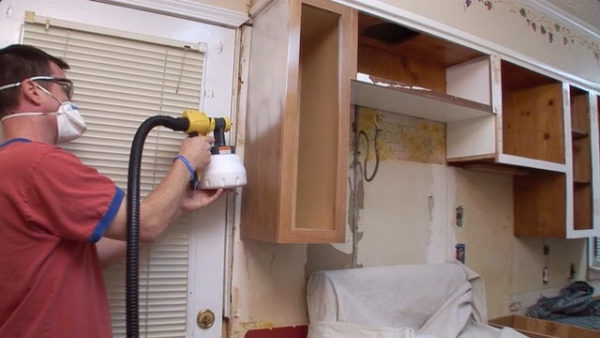
A brush and roller provide the best control over the many nooks and crannies of kitchen cabinets. Work from top to bottom in even strokes, and you’ll have a smooth finish with a personal touch. Fabric and foam rollers can leave a little bit of an orange-peel texture. Spray guns are a potential problem, although they do get the job done quickly.
Consider the look you are vying for before picking a method. Sprayers atomize paint into a fine mist that can offer a slick finish. Or you can purchase a sprayer which uses high pressure, which provides you greater precision in exchange for a higher learning curve. If you’re hoping to get a mirror-like finish with no brush strokes, then a sprayer may be the way to go.
Paint Additives
It is possible to use a paint additive, for example Floetrol, to minimize those brush strokes. It improves the flow of water-based paints so they go on more easily. This reduces the look of good brush strokes and roller marks to get a smoother overall end. They’re ideal if you opt to use a spray gun only because they help the paint to be less likely to clog and clump. While additives offer you a quicker, smoother end, they may increase the dry time.
If your old cabinets are in great shape, place at the prep work, and you’re going to have a fairly easy time with a brush and roller. If they require a lot of sanding and caulking to fill dents and deep scratches, then give yourself additional time to prime and prep. The result will be a durable finish that will endure for as long as you love the color.